
Education and Skill Development Likely to See Continued Focus on Workforce Readiness
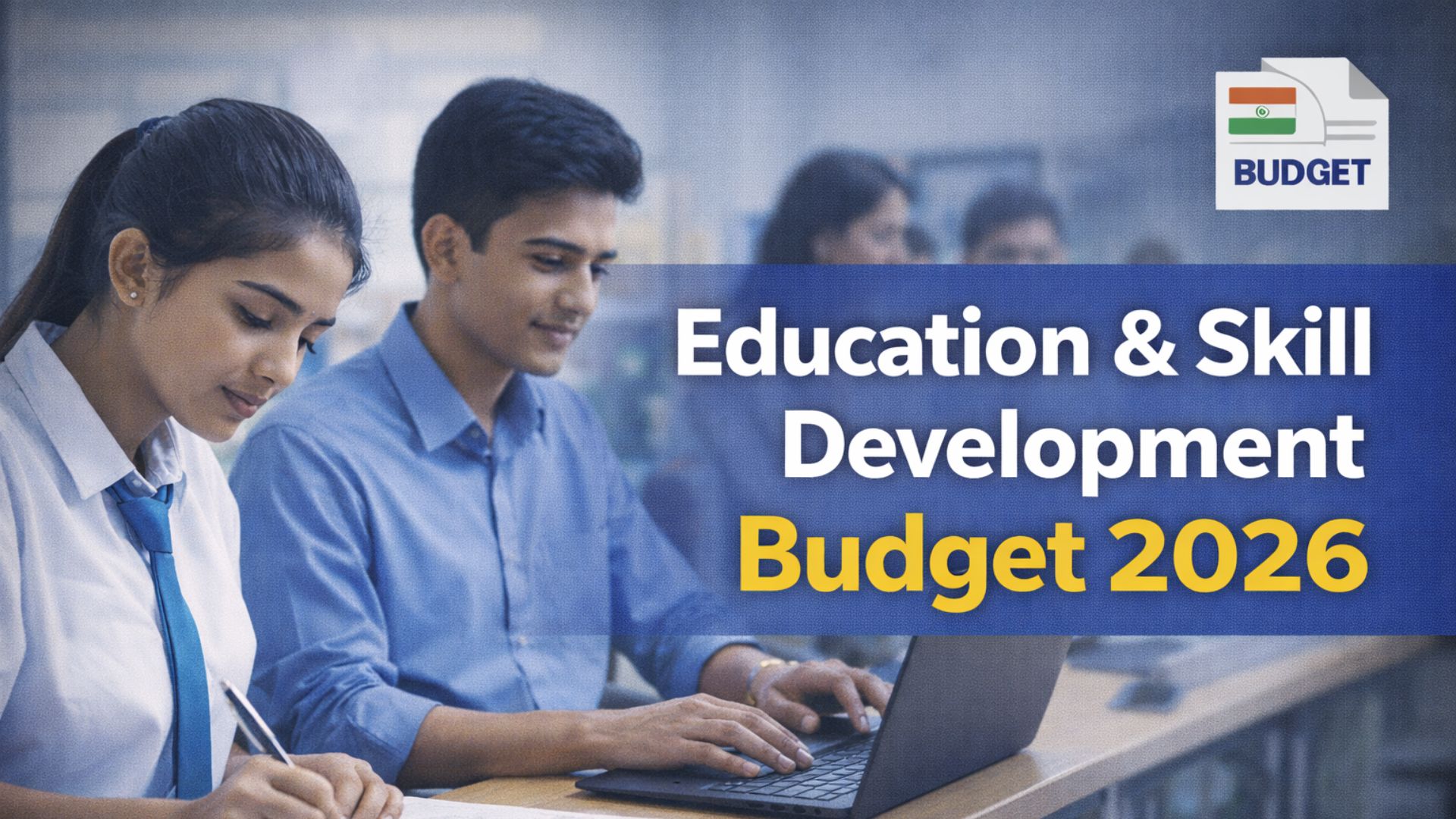
Education and skill development remain critical pillars of India’s long-term growth strategy as the country prepares for the Union Budget on February 1. In the previous Union Budget (FY2025–26), the government allocated approximately ₹1.20 lakh crore to the Ministry of Education, underlining continued emphasis on schooling, higher education, and digital learning initiatives.
A substantial portion of the allocation was directed toward flagship schemes such as Samagra Shiksha, which received around ₹37,500 crore, aimed at improving school infrastructure, teacher training, and learning outcomes. Higher education initiatives, including central universities, IITs, and research institutions, also continued to receive sustained funding. In parallel, the Skill India Mission and related skilling programs were supported to align workforce capabilities with industry needs.
Expectation: Ahead of Budget 2026, policymakers and educators expect continuity in funding with a sharper focus on learning outcomes, digital education expansion, and skill alignment with emerging sectors. Rather than launching new large-scale schemes, the emphasis is expected to be on strengthening existing programs and improving implementation efficiency.
Economic Context: India’s median age remains among the lowest globally, making education and skilling crucial for leveraging its demographic dividend. However, gaps between education and employability persist, highlighting the need for outcome-oriented spending.
Prediction: While fiscal constraints may limit sharp increases in headline allocations, targeted support for teacher capacity building, digital infrastructure, vocational education, and industry-linked skilling is expected. Greater coordination between education and employment initiatives may also be emphasised.
National Outlook and Hope: Sustained investment in education and skill development is viewed as essential for improving productivity, employability, and social mobility. Strengthening these sectors could help India build a future-ready workforce and support long-term economic competitiveness.