
Energy and Renewables Set to Remain Key Pillars of India’s Growth Strategy in Upcoming Budget
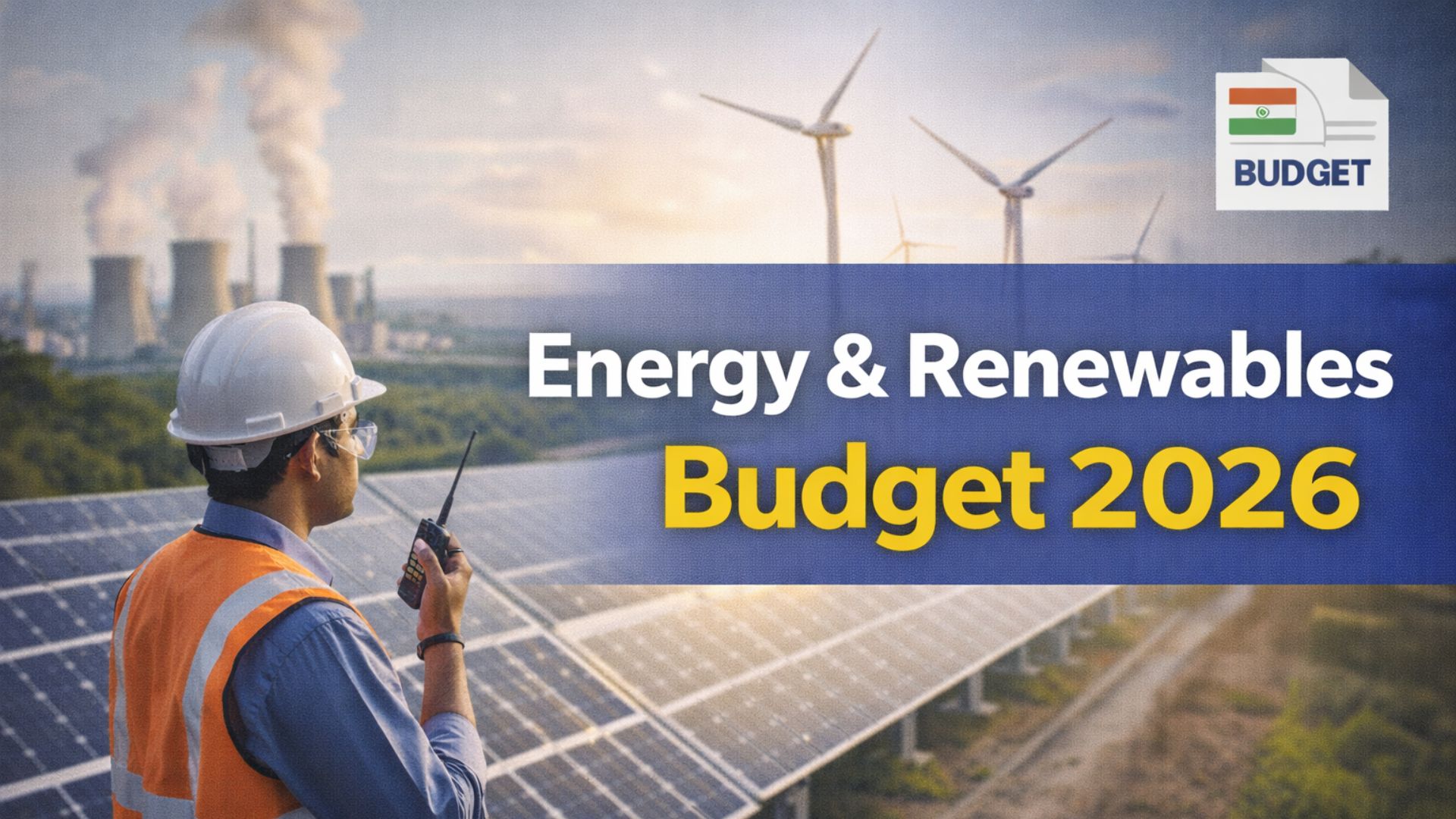
The energy and power sector remains central to India’s economic growth and sustainability goals as the country prepares for the Union Budget on February 1. In the previous Union Budget (FY2025–26), the government allocated approximately ₹24,000 crore to the Ministry of Power and around ₹19,500 crore to the Ministry of New and Renewable Energy (MNRE), underscoring a dual focus on energy security and clean energy transition.
A significant portion of renewable energy funding was directed toward solar and wind power expansion, grid integration, and green energy corridors. India has already crossed 180 GW of installed renewable energy capacity, and the government has reiterated its long-term target of 500 GW of non-fossil fuel capacity by 2030. Budgetary support has also continued for schemes promoting rooftop solar, green hydrogen, and battery storage.
Expectation: Ahead of Budget 2026, stakeholders expect continuity in policy support for renewables, alongside measures to strengthen transmission infrastructure and grid stability. Emphasis is likely to remain on scaling existing schemes rather than launching multiple new initiatives.
Economic Context: India’s power demand has been rising steadily, driven by industrial growth, urbanisation, and increased household consumption. Ensuring reliable electricity supply while managing the energy transition remains a key policy challenge.
Prediction: While headline allocation increases may be moderate due to fiscal constraints, targeted funding for grid upgrades, renewable integration, and energy storage is expected. Support for green hydrogen and domestic manufacturing of renewable equipment may also be reinforced.
National Outlook and Hope: Sustained investment in power and renewable energy is viewed as essential for economic growth, climate commitments, and energy independence. Continued policy stability could help India attract long-term investments, reduce carbon intensity, and ensure affordable and reliable power for households and industries.